
Buying Your First Tractor: What You Need to Know
Practical advice from five generations of experience at Fischer Mill Supply in Oregon City, Oregon.
Buying your first tractor is exciting. Whether you've recently purchased a few acres, are getting caught up on projects around your property, or are simply tired of doing everything by hand, a tractor can make a big difference.
But figuring out which tractor to buy? That can be a little overwhelming.
With so many brands, horsepower ratings, transmissions, and attachments to choose from, it's easy to get caught up in specifications and online reviews.
At Fischer Mill Supply, we've been helping farmers and property owners find the right equipment for generations. And one thing we've learned is that the best tractor isn't necessarily the biggest or most expensive one. It's the tractor that fits your property, the jobs you need to accomplish, and your budget.
Before making that investment, here are a few things our team encourages first-time tractor buyers to consider.
1. Start With the Jobs You Need to Get Done
One of the first questions we'll ask when someone comes in looking for a tractor is, "What are you planning to use it for?"
"What are you planning to use it for?"
It's a simple question, but it's probably the most important one.
For many of our first-time tractor customers here in Northwest Oregon, the most common jobs include:
• Mowing pastures and maintaining overgrown areas.
• Grading and maintaining gravel driveways.
• Moving dirt, gravel, mulch, or other materials.
• Landscaping and general property maintenance.
• Cleaning up brush, limbs, and debris.
• Maintaining fencing and other improvements around the property.
We encourage customers to think about what they'll be doing regularly, not just the occasional big project.
For example, if you'll spend most of your time mowing, maintaining a driveway, and moving landscaping materials, your tractor needs may be quite different from someone who plans to bale hay, work larger fields, or move heavy round bales.
And don't forget about future projects. You don't necessarily need to purchase every attachment today, but it's worth making sure your tractor can handle the equipment you may want later.
2. How Much Tractor Do You Really Need?
One of the biggest misconceptions we see is that more horsepower automatically means a better tractor.
Horsepower certainly matters, but it doesn't tell the whole story.
Two tractors with similar horsepower ratings can have very different sizes, weights, loader capacities, and capabilities.
When helping customers compare tractors, we look at several factors:
• Engine horsepower: An indication of the tractor's engine power, but not a complete measure of what it can do.
• PTO horsepower: The power available to operate implements such as rotary cutters and tillers. This can be especially important when choosing attachments.
• Loader lift capacity: Important if you plan to move gravel, dirt, pallets, firewood, or other heavy materials. Remember that published loader capacities depend on how and where the measurement is taken, and attachment weight reduces the load you can carry.
• Tractor weight and traction: A heavier tractor may provide advantages for pulling and ground-engaging work, although appropriate tires, ballast, and ground conditions also play important roles.
• Physical size: Consider gates, buildings, wooded areas, turning space, and where you'll store the tractor.
A Real Example From Our Dealership
A customer recently shared a story on our Facebook page about purchasing his first tractor from Colin, our sales manager, several years ago.
He originally had his mind set on a tractor with more than 30 horsepower. After asking about the customer's property, intended jobs, and implements, Colin recommended a 26-horsepower tractor instead.
The smaller tractor could handle the work the customer had planned, and the recommendation saved him a couple thousand dollars.
That story reflects how we approach tractor sales.
We'd rather help you buy the tractor you need than sell you more tractor than you'll use.
Sometimes that means recommending a larger model. Other times, it means explaining why a smaller, more affordable tractor will do the job just fine.
3. Your Property Matters Just as Much as Your Acreage
If you've been searching online for the best tractor for five acres or ten acres, you've probably come across recommendations based almost entirely on property size.
But acreage is only part of the equation.
Here in Northwest Oregon, we work with customers maintaining everything from small rural properties and horse facilities to Christmas tree farms, livestock operations, and larger agricultural acreages. And no two properties are exactly alike.
A relatively flat five-acre property with open pasture and a gravel driveway may have very different equipment needs than five acres of steep, wooded ground.
Consider:
• Terrain: Is your property flat, rolling, or steep?
• Ground conditions: Are you dealing with wet areas, soft soil, or firm gravel?
• Access: How wide are your gates, trails, and building entrances?
• Obstacles: Will you be maneuvering around trees, fencing, barns, or landscaping?
• Storage: Will the tractor, loader, and any attached implements fit where you plan to keep them?
Tires also make a difference. Agricultural, industrial, and turf tires each have advantages depending on traction needs and how much you want to protect your lawn or other surfaces.
For properties with slopes, it's especially important to discuss tractor stability, suitable tires, proper ballast, and safe operating practices. Four-wheel drive can improve traction, but it doesn't eliminate rollover risks or make every slope safe to operate on.
Our advice: Tell us about your property. Better yet, bring pictures. Sometimes seeing the driveway, pasture, or hillside you're working with helps us make a much better recommendation.
4. Is a Hydrostatic Tractor Better Than a Manual?
This is one of the questions we hear most often from first-time tractor buyers.
The transmission affects how the tractor operates, how easily you can change speeds and direction, and how comfortable you'll feel doing different jobs.
Hydrostatic Transmission (HST)
Hydrostatic transmissions are popular on compact tractors, particularly for property owners and customers doing frequent loader work.
Instead of shifting through traditional gears to control travel speed, you generally use a pedal or pedals to adjust speed and direction.
This can make operating it feel more intuitive, especially for someone new to tractors.
A hydrostatic transmission may be a great choice if you're regularly:
• Moving gravel, dirt, or mulch with a front-end loader.
• Cleaning up brush and debris.
• Mowing around trees, buildings, and obstacles.
• Working in smaller spaces that require frequent maneuvering.
• Switching between forward and reverse.
For example, if you're repeatedly scooping gravel from a pile and carrying it to different areas of your driveway, a hydrostatic transmission can make those frequent direction changes easier.
Hydrostatic tractors are also capable of many mowing and ground-engaging jobs when properly matched to the implements and workload.
Manual or Gear Transmission
Gear transmissions use selectable gear ratios and can be a practical choice for operators who spend extended periods working at relatively consistent speeds.
Depending on the tractor and application, they can offer efficient power transfer and may be available at a lower purchase price.
A gear transmission may appeal to customers who regularly perform:
• Extended field mowing.
• Certain tillage and ground-engaging jobs.
• Steady-speed agricultural work.
• Jobs where frequent direction changes aren't necessary.
However, not every gear transmission operates the same way.
Some tractors offer mechanical shuttle or power shuttle transmissions that make forward and reverse changes more convenient, which can be especially helpful for loader work.
So, Which Transmission Is Better?
There isn't one answer for everyone.
If most of your work involves frequent maneuvering and loader operation, hydrostatic is often worth serious consideration.
If you're doing extended, steady-speed fieldwork, a gear or shuttle transmission may be a good fit.
But the tractor model, available transmission options, operator comfort, and specific jobs all matter.
This is one of the reasons we encourage customers to try different tractors rather than making their decision entirely from a specification sheet.
5. Don't Spend Money on Implements You Won't Use
This is one of the biggest mistakes we see first-time tractor buyers make.
It's easy to get excited about all the attachments available for a new tractor. And while implements can make your tractor incredibly versatile, that doesn't mean you need every one of them.
A backhoe is a good example.
A tractor-mounted backhoe can be a useful attachment for certain projects, but it's also a significant investment. If you're only planning to dig a few holes or complete one landscaping project, it may make more sense to rent an excavator or hire someone for that particular job.
On the other hand, if you have ongoing digging projects and a compatible tractor, a backhoe may be worth considering.
The same thinking applies to other attachments.
For many of our first-time customers, some of the most useful implements include:
• Front-end loader: Moving dirt, gravel, mulch, and other materials.
• Rotary cutter: Maintaining pastures and overgrown areas.
• Box blade or grading scraper: Maintaining gravel driveways.
• Rotary tiller: Preparing gardens and working soil.
• Pallet forks: Handling suitable palletized materials and other loads within the tractor's rated capacity.
• Grapple: Moving brush and debris when the tractor has the required hydraulic setup.
Rather than putting together the biggest equipment package possible, we like to start with the jobs you'll do most often.
You can always add implements later, provided your tractor has the horsepower, hydraulic capabilities, hitch capacity, and other requirements to operate them safely.
Our advice: Put your money toward the equipment you'll actually use. Sometimes the best purchase is knowing what not to buy.
6. Consider Your Entire Budget, Not Just the Tractor Price
We understand that buying a tractor is a big investment.
And while it's important to find something within your budget, we encourage customers to look at the complete cost of ownership.
Depending on your needs, that may include:
• The tractor and front-end loader.
• Implements and attachments.
• Proper rear ballast or other required equipment.
• Financing costs and terms.
• Routine maintenance and service.
• Fuel, filters, fluids, and eventual replacement parts.
• Transportation or pickup and delivery when needed.
It's also worth thinking about how often you'll use the tractor.
If you have a handful of occasional projects, it may make more sense to purchase a tractor suited to your regular needs and rent specialized equipment when necessary.
At Fischer Mill Supply, we offer both Massey Ferguson and KIOTI tractors, giving customers a variety of options in size, features, transmissions, and price.
We can also walk you through current manufacturer financing programs and help you compare available options.
Our goal is to help you make a purchase you're comfortable with, not just today, but years down the road.
7. Should You Buy a New or Used Tractor?
A new tractor isn't always the right answer for every customer. Depending on your budget, experience, and intended use, a used tractor may be worth considering.
Benefits of Buying New
A new tractor may offer:
• Current features and transmission options.
• Applicable manufacturer warranty coverage.
• Available manufacturer financing programs.
• Known equipment history.
• The opportunity to choose a configuration that fits your needs.
Benefits of Buying Used
A used tractor may provide:
• A lower initial purchase price.
• The opportunity to purchase a larger or differently equipped tractor within your budget.
• Good value when the equipment has been properly maintained and inspected.
However, condition matters.
When shopping used, pay attention to maintenance history, hours, tire condition, hydraulics, transmission operation, leaks, and signs of excessive wear or damage.
At Fischer Mill Supply, our used tractors are inspected through our in-house service and repair department and receive a complete service before being offered for sale.
We want customers to feel comfortable with what they're purchasing, whether it's brand new or previously owned.
8. YouTube Is Helpful, but Nothing Replaces Trying a Tractor Yourself
There's a lot of good information available online, and we absolutely encourage customers to do their research. YouTube videos, online reviews, and tractor forums can help you learn about different models and features.
But it's important to remember that what works for one person may not work for another.
A tractor that gets a glowing review from someone maintaining flat property in another part of the country may not be the best choice for your terrain, workload, or personal preferences.
And specifications can't tell you everything about how a tractor feels.
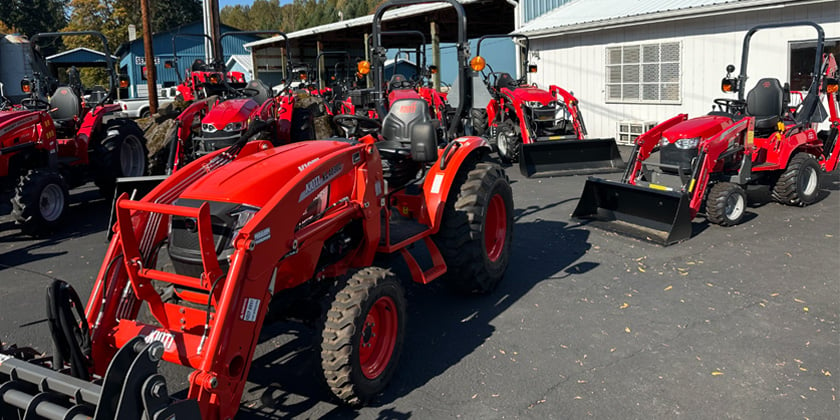
That's why we encourage customers to visit Fischer Mill Supply and test-drive tractors right here on our dealership lot.
You can compare different models, sit in the operator's seat, try the controls, and see how the tractor handles.
Pay attention to:
• How comfortable the seat and operator platform feel.
• How easy it is to get on and off.
• Visibility around the loader and tractor.
• The location of the pedals, joystick, and other controls.
• How the transmission feels when changing speeds or direction.
• Whether the tractor feels comfortable for your height and build.
Sometimes customers arrive thinking they want one model and leave preferring another simply because it feels better to operate. And that's exactly why we think it's worth trying before buying.
9. What Happens After You Buy Your Tractor?
This is something we believe every tractor buyer should think about, regardless of which brand or dealership they're considering.
Purchasing a tractor is only the beginning.
What happens when it's time for maintenance? What if you need a part? What if something breaks down or you have a warranty question?
Before purchasing, we'd encourage you to ask:
• Does the dealership have an in-house service department?
• Are technicians available to diagnose and repair the equipment?
• Can the dealership handle manufacturer warranty work?
• Are common maintenance and replacement parts readily available?
• Is equipment pickup and delivery available?
• Can you easily reach someone when you need help?
At Fischer Mill Supply, our relationship with customers doesn't end when the tractor leaves the lot. We have an established parts department and an in-house service and repair shop, with experienced staff available to help customers with maintenance, repairs, and warranty questions.
We also offer equipment pickup and delivery for service and repair, which can be especially helpful for customers who don't have a trailer or a convenient way to transport their tractor.
And when it's time for that important first service, we send customers a reminder by email or text message, whichever they prefer.
We know our customers depend on their equipment, and we want to be a place they feel comfortable calling when they need help.
10. The Little Things Matter Before Your Tractor Leaves the Dealership
One thing customers may not think to ask is what happens between purchasing a tractor and taking it home.
At Fischer Mill Supply, every new tractor goes through a pre-delivery inspection and preparation process.
Our team checks the equipment, tops off fluids and fuel, and makes sure the tractor is clean and ready for its new owner. We wash and wax the tractor and take pride in how it looks when it leaves our dealership.
When appropriate for the tractor and its intended use, we can also fill the rear tires with beet juice ballast to help provide the weight needed for certain applications, particularly loader work. Ballast requirements vary, and we follow the applicable tractor and loader recommendations.
If you've purchased implements with your tractor, we also make sure they're properly matched and hook up correctly, and that they're clean and presentable before delivery.
We do our best and believe a customer investing in a new tractor deserves to receive equipment that's been carefully prepared.
We want you to be excited when you see your new tractor, and confident that it's ready to go to work.
11. Buy From People Who Take the Time to Understand Your Needs
At Fischer Mill Supply, we've been family owned and operated since 1889.
Over five generations, we've worked with experienced farmers, livestock producers, acreage owners, and families purchasing their very first tractor.
We know that most people don't walk into a dealership already knowing exactly what they need.
And we don't expect you to.
Whether you're comparing a Massey Ferguson and a KIOTI, trying to decide between hydrostatic and gear transmissions, or wondering which implements make the most sense for your property, our team is here to help you work through those decisions.
Sometimes that means recommending a bigger tractor. Sometimes it means recommending a smaller one. And sometimes it means telling you that you probably don't need an attachment you were considering.
We'd rather help you find the right equipment the first time than sell you something that isn't the best fit.
Ready to Start Shopping for Your First Tractor?
If you're thinking about buying your first tractor, we'd love to help.
Stop by Fischer Mill Supply near Oregon City, Oregon, and take a look at our Massey Ferguson and KIOTI tractors.
Bring a list of the projects you want to tackle, a few pictures of your property, and any questions you have. You can compare models, take a test drive on our lot, and talk with our team about what makes the most sense for your needs and budget.
We're here to help you find a tractor you'll be happy with for years to come.
Fischer Mill Supply, Inc.
Family Owned & Operated Since 1889Oregon City, Oregon
(503) 631-3411
Serving farmers, property owners, and rural communities throughout Clackamas County and the surrounding Northwest Oregon area.
Disclaimer: This article is intended for general educational purposes only. Equipment specifications, capabilities, compatibility, safety requirements, pricing, financing offers, warranty coverage, and operating conditions vary by manufacturer, model, and configuration and are subject to change. The examples and recommendations provided are general in nature and do not guarantee equipment performance or suitability for any particular application. Always consult the manufacturer's operator manual, specifications, safety instructions, and warranty terms before purchasing or operating equipment. Contact Fischer Mill Supply for recommendations specific to your property and intended use.